

Red Face and Rosacea: How Is BBL Treatment Performed?
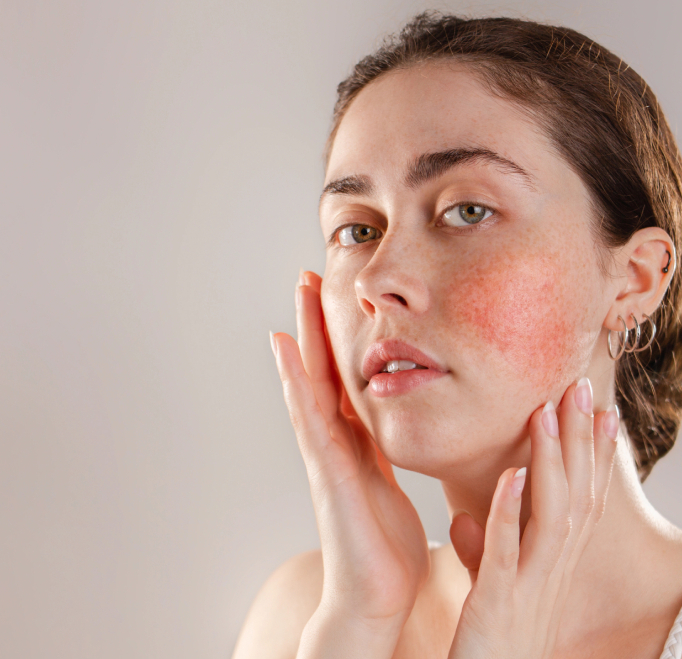
Redness that appears on the face from time to time may be associated with everyday circumstances such as hot weather, exercise or stress. However, if the redness gradually becomes persistent, fine blood vessels around the cheeks and nose become more visible, and burning and sensitivity accompany it, assessment for rosacea may be required.
Rosacea, also commonly known as “rose disease”, is not merely facial redness. It is a chronic inflammatory skin condition that may flare up from time to time and can present with different findings from person to person.
Different methods may be used in rosacea treatment according to the person’s predominant complaint. In people with prominent persistent redness and superficial visible blood vessels, laser and broadband light systems that target vascular structures may be considered as part of the treatment plan.
The aim of BBL applications is not to “eliminate” rosacea completely, but to help reduce the redness and visible blood vessels associated with the condition.
What Is Rosacea?
Rosacea is a chronic inflammatory skin condition that most commonly affects the central part of the face.
It is most often seen:
- on the cheeks,
- on the nose,
- on the forehead,
- on the chin.
In the early stages of the condition, redness may come and go. Over time, in some people the redness may become more persistent and superficial capillaries may become more noticeable.
In some types of rosacea, red bumps and pustules resembling acne may also develop. However, it is important to distinguish these from classic acne.
Eye symptoms such as dryness, stinging, redness or sensitivity at the edge of the eyelids may also accompany rosacea.
Is Facial Redness Always Caused by Rosacea?
No.
Facial redness may occur for different reasons. Sensitive skin, contact dermatitis, seborrhoeic dermatitis, sun damage, certain medicines and other dermatological conditions can create an appearance resembling rosacea.
For this reason, it is not correct to diagnose rosacea solely on the basis that the face looks red.
In a dermatological assessment in Uskudar, when the redness began, the circumstances in which it increases, whether burning or itching is present, and the vascular structures in the skin are assessed together.
Correct diagnosis is the first step in determining the treatment method.
Why Does Rosacea Flare Up?
The cause of rosacea cannot be explained by a single factor. Genetic predisposition, the immune system, vascular structures and changes in the skin barrier are thought to play a role together.
In addition, certain environmental and personal factors may facilitate flare-ups of the condition.
Common triggers may include:
- sunlight,
- hot weather,
- sudden temperature changes,
- hot drinks,
- spicy foods,
- alcohol,
- intense exercise,
- stress,
- cosmetic products that irritate the skin.
Not everyone has the same triggers. Therefore, in rosacea management it is important for each person to identify their own causes of flare-ups.
What Is BBL and How Is It Used for Rosacea?
BBL is an application referring to broadband light technology. It is based on the principle that light at different wavelengths is absorbed by specific target structures in the skin.
One of the principal treatment targets in rosacea is haemoglobin. Haemoglobin is a substance found within blood vessels that can absorb light energy at certain wavelengths.
When appropriate filters and energy parameters are used, the light energy is intended to be absorbed by superficial vascular structures. As a result of the controlled thermal effect produced, it may help reduce visible blood vessels and diffuse redness.
The light is directed at the target vascular structure while preserving the surrounding tissue as far as possible.
How Is Cellec V – BBL Applied for Rosacea?
Cellec V is one of the intense pulsed broadband light systems with different filter options.
For rosacea treatment, a filter suitable for the nature of the person’s redness, the characteristics of visible blood vessels and their skin type is selected. Application parameters should be determined individually for every person.
During treatment, controlled pulses of light are applied to the skin. The person may describe a brief sensation of warmth, stinging or a mild feeling similar to an elastic band snapping.
The duration of the application varies according to the size of the area to be treated.
Does BBL Eliminate Rosacea Completely?
Rosacea is a chronic condition with a tendency to recur. Therefore, it is not correct to say that any device-based treatment eliminates rosacea completely.
With BBL treatment, the aim may be to help reduce, in particular:
- persistent facial redness,
- visible superficial blood vessels,
- an uneven red appearance.
However, different treatments may be needed for inflammatory rosacea bumps, eye symptoms or skin-barrier problems.
For this reason, BBL should be regarded not as a method that treats all signs of rosacea on its own, but as part of an individually tailored dermatological treatment plan.
Why Might a Combined Approach Be Necessary in Rosacea Treatment?
Rosacea is not only a vascular problem.
While redness is predominant in some people, acne-like inflammatory lesions or marked sensitivity may be more apparent in others.
Therefore, a treatment plan may assess together:
- topical treatments recommended by a dermatologist,
- systemic medicines where necessary,
- care that supports the skin barrier,
- sun protection,
- light-based applications such as laser or BBL.
The aim here is not to use as many treatments as possible at the same time, but to control the predominant signs of rosacea using the right methods.
For Which Rosacea Signs Is BBL More Commonly Considered?
BBL may be considered especially where a vascular, that is, blood-vessel-related appearance is predominant.
Suitability may be assessed in people who have continuous redness around the cheeks and nose, whose fine capillaries have become visible, or whose occasional flushing has become persistent over time.
By contrast, during some periods when active inflammation is intense or the skin barrier is significantly compromised, it may be preferable first to bring the condition under control.
The timing of the application should be decided after a dermatological examination.
How Many BBL Treatment Sessions Are Applied?
There is no standard number of sessions.
The session plan may vary according to factors such as:
- the extent of the redness,
- the diameter and depth of the blood vessels,
- the person’s skin type,
- the clinical characteristics of rosacea,
- the response to the application.
A treatment plan of several sessions may be devised for some people. The skin’s response is assessed between sessions, and application parameters can be adjusted again where necessary.
Because of rosacea’s chronic nature, whether maintenance applications will be needed over time may also vary from person to person.
What May Be Seen on the Skin after BBL?
Temporary redness, slight swelling, warmth or sensitivity may be seen after the procedure.
Temporary colour changes may occur, particularly in areas where prominent blood vessels have been targeted.
The duration of these effects varies according to the person’s skin structure and the application parameters used.
After the procedure, it is important to follow the skincare recommended by the dermatologist and to protect the skin from unnecessary irritation.
Why Is Sunscreen Important in Rosacea?
Sunlight is one of the most common triggers of rosacea.
Therefore, sun protection has an important place not only after BBL application, but also in the day-to-day management of rosacea.
A broad-spectrum sunscreen should be used regularly and reapplied as needed when spending time outdoors.
The formulation of sunscreen is also important for sensitive, rosacea-prone skin. Products that the person can tolerate should be preferred over products that increase burning or redness in the skin.
Physical protection methods such as hats and shade may also be beneficial, especially during intense sun exposure.
How Should Skincare Be for Rosacea-Prone Skin?
In rosacea, the skin barrier is often more sensitive.
Therefore, intensive peels, frequently used acids, harsh cleansers or products that over-dry the skin can cause increased redness.
Daily care should be kept as simple as possible.
Gentle cleansers, barrier-supporting moisturisers and appropriate sunscreens are important parts of basic care.
If marked burning, stinging or redness occurs when a new product is used, dermatological assessment should be sought rather than continuing to use the product.
Is BBL Suitable for Everyone with a Red Face?
No.
It is not appropriate to apply BBL before identifying the cause of redness. This is because the treatment approach may be completely different in some dermatological conditions other than rosacea.
In addition, the person’s skin type, active tanning status, medicines in use and existing skin conditions should be assessed before the procedure.
Light-based procedures are planned more carefully for heavily sun-exposed or tanned skin.
Are Results in Rosacea Treatment Permanent?
A reduction may be achieved in the targeted vascular structures and the appearance of redness with BBL. However, the tendency towards rosacea does not disappear.
Sun, temperature, stress or the person’s other triggers may cause new redness and blood vessels to appear over time.
Therefore, the long-term approach to rosacea treatment is based not only on device application, but also on controlling triggers, correct skincare and dermatological follow-up where needed.
Persistent facial redness and prominent capillaries may be among the most common signs of rosacea. However, not every red face is rosacea, and the cause of redness must be correctly identified before treatment begins.
Broadband light technologies such as Cellec V – BBL may be used in suitable people to help reduce diffuse redness accompanying rosacea and the appearance of superficial blood vessels.
When planning rosacea treatment within aesthetic dermatology in Istanbul, the aim is not merely to address visible redness; the skin barrier, inflammation, vascular structures and personal triggers are assessed together.
Successful management of rosacea is associated less with a single device than with correct diagnosis and a personalised long-term approach.
Frequently Asked Questions
Does BBL help rosacea?
BBL may be considered in suitable people to help reduce diffuse redness accompanying rosacea and visible superficial blood vessels.
Does BBL eliminate rosacea completely?
Rosacea is a chronic skin condition with a tendency to recur. BBL may help control certain signs, but it cannot be said to eliminate the condition completely.
How many BBL sessions are needed for rosacea?
The number of sessions varies according to the extent of redness, the characteristics of the blood vessels, skin type and the person’s response to treatment.
Does the face become red after BBL?
Temporary redness, a sensation of warmth, sensitivity or slight swelling may occur after the application.
Are rosacea and sensitive skin the same thing?
No. Sensitive skin is a skin characteristic, whereas rosacea is a dermatological condition. Because they can cause similar complaints, the distinction should be made through dermatological assessment.
Does the sun increase redness in rosacea?
The sun is one of rosacea’s common triggers. Regular sun protection is an important part of the day-to-day management of the condition.


