





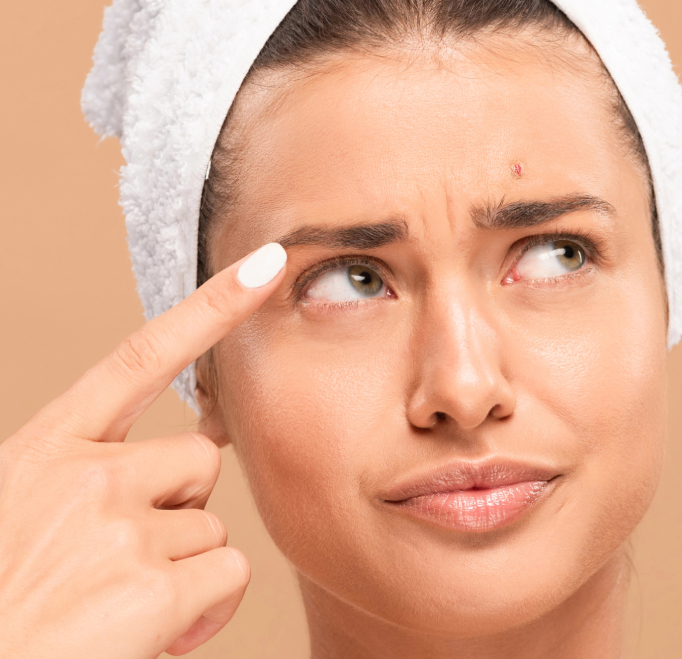
Acne Scar Treatment: Which Method for Which Scar?
After active acne has subsided, scars remaining on the skin may persist for a long time despite the completion of acne treatment. While some people experience only red or brown discolouration, others may develop depressions and textural irregularities on the skin surface.
For this reason, there is no single answer to the question, “Which procedure removes acne scars?” that applies to everyone. The most important factor in determining the right method for acne-scar treatment is the type of scar.
Different methods, such as gold needle radiofrequency, fractional laser, thulium laser, subcision, PRP and mesotherapy, may be considered in acne-scar treatment. However, these procedures should be regarded not as alternatives to one another, but as methods that target different skin concerns.
When planning acne-scar treatment in Uskudar dermatology practice, the scar’s colour, depth, surface characteristics and the person’s skin type are assessed first. Where necessary, combined treatment plans using more than one method together may be devised.
Why Do Acne Scars Form?
Especially in deep and inflammatory acne lesions, changes may occur in the skin’s collagen structure during healing.
Where tissue loss is considerable, depressed scars may form on the skin surface. In some people, excessive collagen production may develop during healing, leading to raised scars.
The red or brown areas left after acne are not always true “scars”. They may be discolourations that develop after inflammation.
This distinction is important for treatment. This is because the same procedure is not used for a pitted acne scar and a brown acne mark.
What Types of Acne Scars Are There?
Depressed acne scars are generally assessed in three main groups.
- Ice-Pick Scars
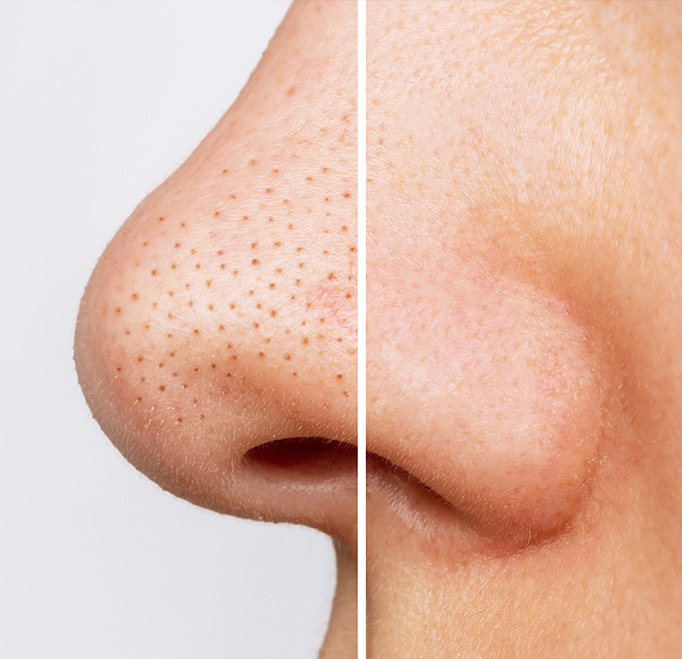
These have narrow openings but extend deeply. They may appear as small holes on the skin surface.
Because of their deep structure, superficial skin-resurfacing procedures alone may not always be sufficient.
- Boxcar Scars
These are depressions with a wider base and more distinct borders. They may be superficial or deeper.
Depending on the depth of the scar, laser, radiofrequency or different combined procedures may be considered.
- Rolling Scars
These are broader, undulating-looking scars caused by fibrous bands beneath the skin pulling the surface downwards.
With this type of scar, resurfacing the skin alone may not be sufficient. The underlying tethering may also need to be released.
For this reason, subcision may be one of the important treatment options, especially for rolling-type acne scars.
How Does Gold Needle Radiofrequency Work on Acne Scars?
Microneedle radiofrequency is one of the procedures commonly known as gold needle treatment.
When fine microneedles reach the predetermined depths of the skin, radiofrequency energy is delivered to the tissue in a controlled manner. The thermal effect created is intended to support the skin’s natural repair mechanisms and collagen remodelling.
Gold needle radiofrequency may be considered for;
- irregularities on the skin surface,
- some atrophic acne scars,
- the appearance of enlarged pores,
- supporting skin quality
may be considered.
The needle depth and energy level should be adjusted according to the person’s skin structure and the characteristics of the scars.
How Is Fractional Laser Used for Acne Scars?
Fractional laser is one of the methods that has long been used in acne-scar treatment.
Laser energy aims to initiate a controlled renewal process by creating microscopic treatment zones in the skin. Preserving the healthy surrounding tissues contributes to the healing process.
It may be considered especially for prominent textural irregularities on the skin surface and some boxcar-type scars.
The depth of effect and recovery periods of ablative and non-ablative fractional laser systems differ from one another. Therefore, a standard treatment plan cannot be created merely on the basis of the expression “fractional laser”.
Skin type, scar depth and tendency to pigmentation should be assessed together.
What Is Thulium Laser Used for in Acne Scars?
Thulium laser is one of the laser technologies that works on the fractional principle.
It may be considered especially to support uneven skin colour and overall skin quality. It may form part of the treatment plan where brown tonal differences remaining after acne are also present.
However, in deep pitted acne scars, targeting pigment or superficial tissue alone may not be sufficient.
For this reason, thulium laser’s place in treatment should be determined according to whether the person’s predominant concern is pitted scarring, uneven colour, or a combination of both.
What Is Subcision? Which Acne Scars Is It Used For?
Subcision is a method used especially for atrophic acne scars in which fibrous bands pull the skin downwards.
It aims to release, in a controlled manner, the fibrous attachments beneath the skin using a fine needle or suitable surgical instrument. This is intended to reduce tethering at the base of the scar.
It may be considered especially for rolling-type scars.
Temporary bruising, swelling and tenderness may occur after subcision. In some people, the procedure is performed alone; in others, it may be planned alongside methods such as fractional laser, radiofrequency or PRP.
The important point here is this: if there is a structure pulling the skin down from below, treating the surface alone may not always be sufficient.
Is PRP Used in Acne-Scar Treatment?
PRP is a procedure that uses platelet-rich plasma obtained from the person’s own blood.
Because of the growth factors it contains, it may be considered in different areas of dermatology to support tissue-repair processes.
In acne-scar treatment, PRP may usually be planned not as a standalone method for “erasing scars”, but as a supportive option alongside procedures such as fractional laser, microneedling or subcision.
The person’s skin structure and the other procedures to be performed determine PRP's place in the treatment plan.
What Is Mesotherapy Used for in Acne Scars?
Mesotherapy aims to deliver different active ingredients into the skin by microinjection.
In acne-scar treatment, mesotherapy may be considered, especially as part of combined protocols that support skin quality, moisture balance and the renewal process.
However, deep pitted acne scars should not be expected to disappear through mesotherapy alone.
The place of mesotherapy in the treatment plan should be determined according to the person’s main concern.
How Are Red and Brown Acne Scars Treated?
Not every colour change remaining after acne is a true scar.
Red marks may be related to blood vessels remaining prominent after inflammation. Brown marks, on the other hand, may arise from increased pigment known as post-inflammatory hyperpigmentation.
The treatment of these two conditions differs.
For a red appearance, certain laser or light systems targeting vascular structures may be considered, whereas for brown pigmentation, different laser technologies, medical treatments or controlled peeling procedures may be planned.
For this reason, not only depth but also colour is important in acne-scar treatment.
Why Might Combined Treatment Be Necessary for Acne Scars?
A person may have ice-pick, boxcar and rolling-type scars on the face at the same time. Red or brown discolouration may also accompany them.
A single device should not be expected to treat all these concerns through the same mechanism.
For example, subcision may first be performed for a rolling scar with fibrous bands under the skin, then fractional laser or microneedle radiofrequency may be planned for surface irregularity. Additional methods such as PRP may be considered to support skin quality.
For this reason, combined treatment does not mean “performing more procedures”. It means targeting different concerns with the appropriate methods.
How Many Sessions Does Acne-Scar Treatment Take?
There is no standard number of sessions in acne-scar treatment.
The duration of treatment depends on factors such as;
- the type of scars,
- their depth,
- their extent,
- the person’s skin type,
- the method used,
- the skin’s response to treatment
among others.
In deep, long-standing scars, more than one treatment session and the combined use of different methods may be necessary.
As collagen remodelling is a biological process that takes time, the result of treatment is also generally assessed gradually.
Can Acne-Scar Treatment Be Done in Summer?
The answer to this question varies according to the method to be used.
With some fractional laser procedures that produce noticeable renewal of the skin surface, intense sun exposure may increase the risk of pigment changes after the procedure. For this reason, autumn and winter are periods in which some laser treatments can be planned more easily.
Different technologies, such as gold needle radiofrequency, may be planned at different times after assessing skin type and sun exposure.
The choice of procedure should be made particularly carefully on actively tanned skin.
Regardless of the technology used, treatment timing should be assessed together with the person’s lifestyle and ability to protect themselves from the sun.
When Should Acne-Scar Treatment Begin?
First of all, it is important to bring active acne under control.
Focusing only on old scars while new and intense inflammatory acne continues may make the treatment process more difficult. This is because new acne may cause new scars to form.
Once active acne is under control, the type of existing scars can be assessed and an appropriate treatment plan devised.
For this reason, acne and acne-scar treatment should not be regarded as two entirely independent processes.
Do Acne Scars Disappear Completely?
It is important to establish realistic expectations in acne-scar treatment.
Deep scars are permanent changes in the structure of the skin. Procedures may aim to reduce the depth and appearance of scars, make the skin surface more even, and support overall skin quality.
The response achieved varies from person to person.
Approaches described as “the one procedure that completely eliminates acne scars” are not dermatologically accurate.
The most important question in acne-scar treatment should not be “Which device is better?”, but “Which type of scar is being treated?”
While gold needle radiofrequency supports collagen remodelling, fractional laser may be considered for some textural irregularities on the skin surface. Thulium laser may be included in the treatment plan when pigmentation and skin quality are also concerns. While subcision works through a different mechanism, especially for rolling scars that pull the skin downwards, PRP and mesotherapy may be used supportively in some combined protocols.
When planning acne-scar treatment within aesthetic dermatology in Istanbul, assessing scars individually rather than applying a single method to the whole face provides a more personalised approach.
Correctly identifying the scar type is the most important step in selecting the right treatment method.
Frequently Asked Questions
Which is the most effective treatment for acne scars?
No single method is most effective for every type of acne scar. Treatment should be determined according to the type and depth of the scar.
Is gold needle or fractional laser better?
The two methods work through different mechanisms. Which procedure is suitable is assessed according to skin type and the characteristics of the acne scars.
Which scars are treated with subcision?
It may be considered especially for rolling-type atrophic acne scars with fibrous bands under the skin that pull the skin downwards.
Can Thulium Laser Be Used for Acne Marks?
It may be considered for certain pigment changes remaining after acne and in treatment plans that support skin quality. Suitability is determined according to the type of pigmentation.
Does PRP Remove Acne Scars?
PRP may be used, especially in combined treatments, to support tissue renewal. Deep acne scars should not be expected to disappear completely with PRP alone.
Can Acne-Scar Treatment Be Started in Autumn?
Yes. As sun exposure decreases, autumn may be an appropriate time, particularly for planning certain laser procedures. However, treatment timing should be determined according to the person’s skin structure.